The Process After Death
As a doctor, I've been asked to record the time of death for hundreds of patients. I carefully examine the person, verify there are no signs of life, and document my findings. I offer my prayers and condolences to the family in an attempt to comfort them. Then I leave the room.
As a son, I'm the one left in the room.
Next to me is the body of someone I have loved my entire life. I'm emotionally and physically exhausted. What are the next steps?
Hospitals typically have great social work and palliative care/hospice staff who can offer recommendations. Churches have bereavement ministries for funeral planning. Mortuaries have the staff to orchestrate the next steps.
My mother and I relied on the support of friends and hospital staff for recommendations.
We called church bereavement staff. They explained the nature of the funeral mass, our options, and the guidance offered by the church. For Catholics, cremation is fine, but scattering of ashes is not endorsed.
My mother and I had long talks about my father's preferences and her future desires. We agreed that cremation would be better than burial. I asked the church about facilities for internment of ashes. I learned that they are 11 3/8 wide by 13 3/8 high by 11 5/8 deep and can store two urns. My mother and I agreed that interment of their ashes together in the same niche was desirable. We agreed that a mass should be a personalized memorial service and not just repetition of scripture.
We worked with the church to select a funeral time when the priest, church, and organist were available - this Saturday at 11am. We did have to rearrange the monsignor's schedule and he was happy to accommodate us. We are meeting with church staff on Friday to personalize the ceremony.
We sought recommendations for a good local mortuary which would work with the church. I called them and arranged a planning meeting for tomorrow. We will shop for urns that will fit in the church's niche. We officially released my father's body from the hospital to the mortuary.
We asked our local realtor to help with reception planning. We decided upon a buffet brunch so that the guests could eat the foods that they like.
We arranged a walk along the ocean on my father's favorite path.
We made a list of all local friends and family who should attend and called/emailed/texted them.
The end result is that we have mortuary plans for cremation, a mass/memorial service customized to my father to celebrate his life, and a reception to thank all those who have helped us so much.
My wife flew in at 1:30am this morning and my daughter is flying in on Friday night. We've asked a farm hand from an adjacent property to oversee Unity Farm in our absence.
My advice is that the process after death requires just as much preparation as the healthcare proxy. Pick a mortuary. Pick burial or cremation. Buy a plot or chose an internment/ash scattering site. Decide on a church/temple service, memorial, or other event. We completed these steps in the hours after his death when we were not at our best.
My role as healthcare navigator for my family does not end with all this planning.
My next step is to keep the survivors healthy. I'll be flying to see my mother quarterly and help her decide if living alone is working or if she should consider a nearby over 55 community. Last night, the kitchen drain developed a major clog and every appliance with a clock needed to be reset (we had not been home since Friday night and missed Daylight Savings Time clock adjustment rituals). Without my father, my mother will have to manage plumbing, electrical, painting, maintenance, and landscape work herself. It could be that she'd rather spend her time on cultural events, conversation, and intellectual pursuits with like minded people.
On New Year's Eve, I told my wife that 2013 would be less traumatic/dramatic than 2012. Maybe the second half of 2013.
The Use of Scribes for Clinical documentation
Given the rigors of documentation required for Meaningful Use, quality measurement, and ICD10, some organizations are adding dedicated scribes to rounding and evaluation teams.
I was recently asked two questions about scribes.
Does Meaningful Use allow the use of scribes?
Meaningful Use does not specify who does the documentation, as long as the thresholds for data capture are exceeded.
What are the best practices for scribes used at BIDMC?
At BIDMC the ED scribes use their own credentials and create a "scribe note" under their own identity.
When the physician goes to chart, they have the option to import the scribe note into their own note.
This has 3 important benefits:
1) The scribe is never given access to the system with the physician's credentials (as I've heard happens with some scribe arrangements)
2) The physician has the option to import and then writes/edits the note as they wish (ie - they retain full control for the contents of the note)
3) The MD actively uses the computer and the scribe does not come between the physician and system. (In some arrangements the scribe acts as a human UI to the system and the MD only interacts with the scribe. This becomes a barrier to many of the benefits of online clinical decision support).
Although future improvements in clinical documentation may eliminate the need for scribes, there are best practices that minimize privacy risks and "cut/paste" documentation challenges.
Saying Goodbye to my Father

My parents met when they were 17 and I was born when my mother and father were 19.
I've known him for nearly 51 years.
The community recalls him as the kindest most giving lawyer in Southern California.
To me he was a mentor, a friend, and an inspiration.
He told me a story about my early childhood. When I was two years old, I was playing in the backyard of my grandparents home in Iowa. I fell on grass and began crying. It was not injured in any way. He watched the incident and decided not to run over and console me. Instead he let me brush myself off, realize that I could fall, and in a self reliant way recover from it myself. Within a minute I was ok and back at play. He taught me resilience by being a safety net but letting me find my own way.
In the entrance to my parent's home, there's a woodcut of Don Quixote. Today, my father's unused cane leans against the wall. I was struck by the resemblance of the lance held by the Man of La Mancha to my father's Leki walking stick. Despite 23 years of multiple sclerosis, with the loss of walking and difficulties with activities of daily living, my father always dreamed the impossible dream. He built a Japanese garden, he turned compost, he grew vegetables, he maintained the house, and continued to build/tinker until the end.
Some have commented that only a cruel god would afflict such a kind man with multiple sclerosis, myelodysplastic syndrome, and severe coronary artery disease. However, my father was stubborn and met the adversity head on. He refused pain medications for dental procedures and declined anesthesia for colonoscopies. He made the best of every day no matter what cards life dealt him.
I will miss him but he will always be a part of me and inspire me to new levels of equanimity and endurance.
Goodbye Dad. I love you.
Use of HIE Fully Integrated into the EHR
Note - while I was flying to Los Angeles to be with my father, I wrote the Tuesday-Thursday blog posts which will be automatically published this week. I'm focused on his care now and will return to writing in real time once his needs have been met.
John
-------------
I recently reviewed an article which lamented the low adoption of portal-based HIE that requires clinicians to log into a website outside of their normal EHR workflow to lookup patient information from external facilities. Typical usage in this article was cited as 10%.
At BIDMC we've implemented several types of interoperability that is integrated into standard EHR workflows at the click of the button - no additional login or patient context specification required.
How often is it used? As an example, we looked at the lookups from BIDMC's EHR to the Atrius' Epic applications. As denominator, we counted all adult admissions from 1/1/12 - 9/30/12 that had an Atrius PCP or referring MD.
There were a total of 6,017 Atrius admissions.
Of these, our audit logs show that 3,455 or 57% had an Atrius Epic viewer lookup used during the admission, between the admit and discharge date.
57% for simple integrated viewing verses 10% for community wide aggregation available via a separate website.
This was not intended to be an exhaustive or controlled study. However, it is interesting that simple viewing of external records, fully integrated into the EHR, addresses many clinician requirements for care coordination.
I'm confident that the next generation of HIE such as the work of the Commonwealth of Massachusetts to create a statewide master patient index/record locator service and the nationwide CommonWell Alliance http://www.commonwellalliance.org by a consortium of vendors will empower additional fully EHR integrated solutions.
John
-------------
I recently reviewed an article which lamented the low adoption of portal-based HIE that requires clinicians to log into a website outside of their normal EHR workflow to lookup patient information from external facilities. Typical usage in this article was cited as 10%.
At BIDMC we've implemented several types of interoperability that is integrated into standard EHR workflows at the click of the button - no additional login or patient context specification required.
How often is it used? As an example, we looked at the lookups from BIDMC's EHR to the Atrius' Epic applications. As denominator, we counted all adult admissions from 1/1/12 - 9/30/12 that had an Atrius PCP or referring MD.
There were a total of 6,017 Atrius admissions.
Of these, our audit logs show that 3,455 or 57% had an Atrius Epic viewer lookup used during the admission, between the admit and discharge date.
57% for simple integrated viewing verses 10% for community wide aggregation available via a separate website.
This was not intended to be an exhaustive or controlled study. However, it is interesting that simple viewing of external records, fully integrated into the EHR, addresses many clinician requirements for care coordination.
I'm confident that the next generation of HIE such as the work of the Commonwealth of Massachusetts to create a statewide master patient index/record locator service and the nationwide CommonWell Alliance http://www.commonwellalliance.org by a consortium of vendors will empower additional fully EHR integrated solutions.
Celebrating my Father's Life
As I sit at my father's bedside, managing the increasing heaviness of his breathing, I'm doing my best to keep his lips moist, his extremities warm, and the dosing of his comfort care medications appropriate so there is no air hunger.
People from my parents' past are calling and emailing me, telling me their stories and reveling in the impact my father had on their lives. They've told me:
He inspired them to go into engineering (he's a patent lawyer trained as an engineer)
He inspired them with his kindness and gentleness
His tenacity living with multiple sclerosis for 23+ years inspired them to approach their own illnesses with vigor
Some of the stories people remember:
When I was 13 in 1975, my father got me my first summer job, working at defense contractor TRW. I developed satellite telemetry parsing software in Fortran, working in the same building as Chris Boyce (the Falcon and the Snowman) . My father's effort to give me powerful computer resources in the 1970's changed the course of my life.
One of my father's friends recalls the joy my father felt when he and I built electronics projects together throughout the 1970's - a metal detector, early analog signal processing experiments such as voice synthesizers, and an Altair 8800
I have many special memories of life with my father, many of them forever preserved on Kodachrome:
My father was in the Air Force from 1963 to 1968, so we traveled extensively.
One of my earliest memories was playing on a Oahu beach in Hawaii in 1963 with my father when he was stationed near Pearl Harbor. As a child the ocean was always a favorite place.
We typically drove across country in an old Buick from Air Force posting to posting. My father took me on a cross country drive from New Jersey to Colorado Springs via Mt. Rushmore in 1964 and I collected wool souvenir pennants along the way. I learned to love life on the road.
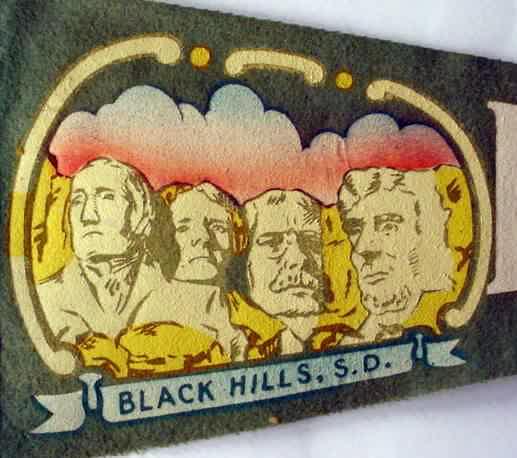
He was stationed near Pensacola, Florida and we lived on the beach in 1965. We walked the surf line every morning to find sharks, starfish, and conch shells washed upon the shore. I developed a love of natural history and exploring.
In 1966, we sat together to watch a new kind of television program - Star Trek, when it first aired in prime time. Since then, I've watched every Star Trek episode and film multiple times.
In 1968, we moved from Willingboro, New Jersey to Torrance, California. We lived in a one bedroom apartment with the family dog, a terrier named Shakespeare. One night Shakespeare became very ill and my father drove with me in the middle of the night, looking for an emergency veterinary hospital, cradling the dog on his lap as he steered the old Buick.
In 1970, I read about linear accelerators in the World Book encyclopedia. I decided to build one at home and my father helped me by going to a local high school machine shop to fabricate parts. I was the only third grader to exhibit atom smashing technology and won the science fair.
In 1972, my father and I built model rockets together and drove to the desert to launch them. The early 1970's were a different time - somewhat dangerous chemicals and rocket fuel were available without restriction. Luckily, we did no harm to ourselves during our adventures.
In 1973, we built a metal detector together, carefully soldering each transistor into a circuit board. I used it to find lost change on Redondo Beach.
In 1974, I found an old minibike in a local junkyard. The engine was largely destroyed by fire. My father and I rebuilt it, buying parts as spare funds became available. By 1975 I was riding it in a nearby parking lot. Since then I've had a lifelong desire to tinker and fix things.
In 1976, we hiked extensively in the Santa Monica mountains - the most nature you'll find in Los Angeles (think of the set from M*A*S*H). For most of my life I've been a hiker, climber, and explorer.
In 1977, we road our bicycles, loaded with gear, from Palos Verdes to Santa Barbara, camping along the way at Point Mugu State Park. I will never forget our attempt at making pancakes on a backpacking stove with a bit too much olive oil. Gooey fried dough is appealing if you are hungry enough.
In 1980, when I graduated from high school, we visited Kauai and hiked the Napali Coast trail. I remember that we confused wild Kukui nuts with Macademia nuts. The laxative properties of Kukui nuts are profound.
In 1980, my adult life began and I attended Stanford, UCSF, and UC Berkeley for years of undergraduate and graduate training. I still shared every experience and tribulation with my father. He subscribed to Science and Nature so that he could discuss the latest scientific advances with authority.
In 1990, he was diagnosed with multiple sclerosis, and over 23 years progressively lost lower body strength. He fought the good fight and only this year bought his first wheelchair.
My role at the moment is to keep him comfortable and celebrate his life, reflecting on the profound impact he had on everyone around him. Over the past day, I've told him all the stories above. At one time in the night, I told him that I loved him. He opened his eyes and whispered, "I know". Since then, he's been resting. The muscle spasms of multiple sclerosis have stopped, and his breathing remains unlabored.
Subscribe to:
Posts (Atom)